Designing an Enterprise
IT Portfolio Management MVP
Identifying Problems
Business Problem
The organization ran several tools to manage its technology portfolio, but the primary source tool had accumulated a history of corrupt and missing data which produced inaccurate annual reporting to the CFO.
User Insight
Interviews and working sessions revealed that when the same data was manually duplicated across tools, no one could tell which was the source of truth. Teams responded by maintaining shared spreadsheets as the "true" record — a fragile workaround that created version-control, auditing, and ownership problems of its own.
A deeper finding surfaced in the sessions: different segments used different terms for the same workflow. Without a shared vocabulary, teams couldn't consistently agree on where projects stood or who owned what.
The Work
Designing for a single, trustworthy source of truth
01 · Transparency through audit history
Captured who changed what and when, with versioning — turning later investigations from guesswork into a clear trail.
02 · Accuracy through real-time validation
Error alerts, validation checks, and owner reviews caught obvious mistakes at checkpoints, preventing the bad data that had corrupted reporting downstream.
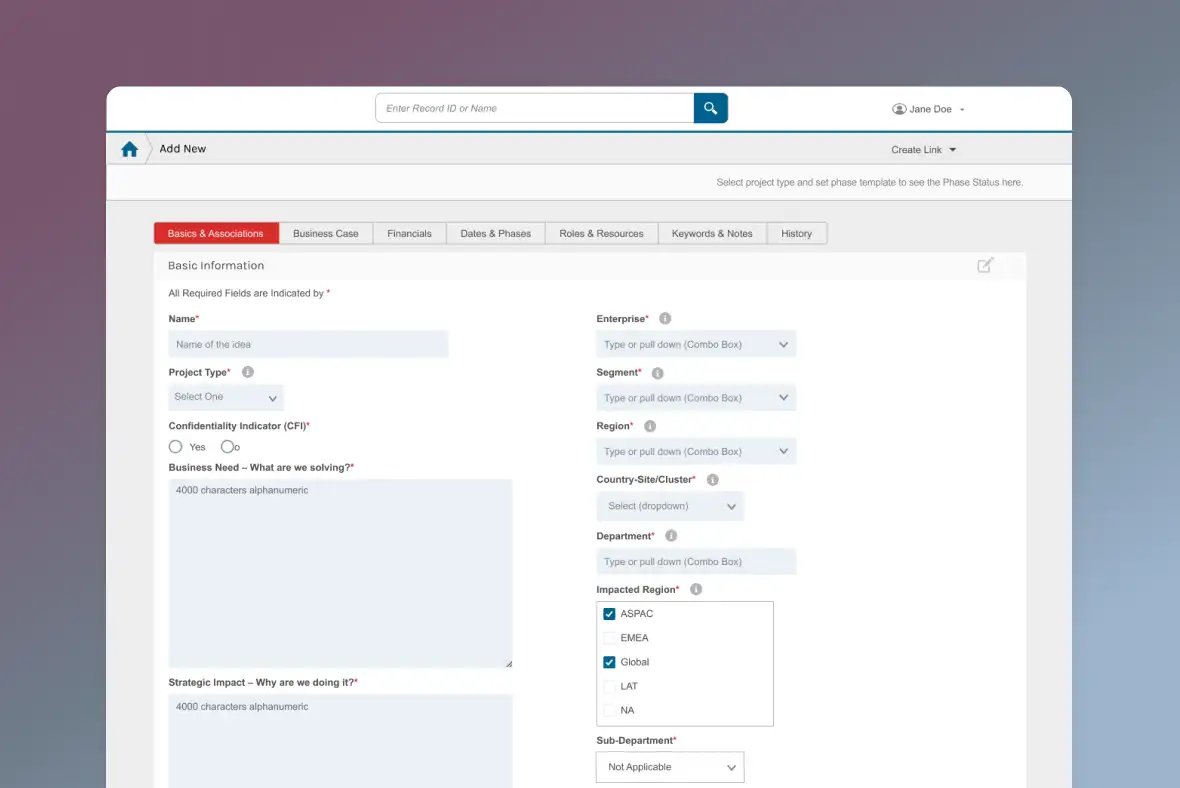
03 · Usability through an intuitive architecture
Gave users visibility into project status, events, data, and ownership, so they could see how work moved through the process and where their responsibilities fit. In-context definitions let users confirm what a term meant, right where it appeared in the interface.

