Activated UX
2021
Reducing Funnel Drop-Off Through Search Consolidation
Problem
Early-Stage Funnel Leakage
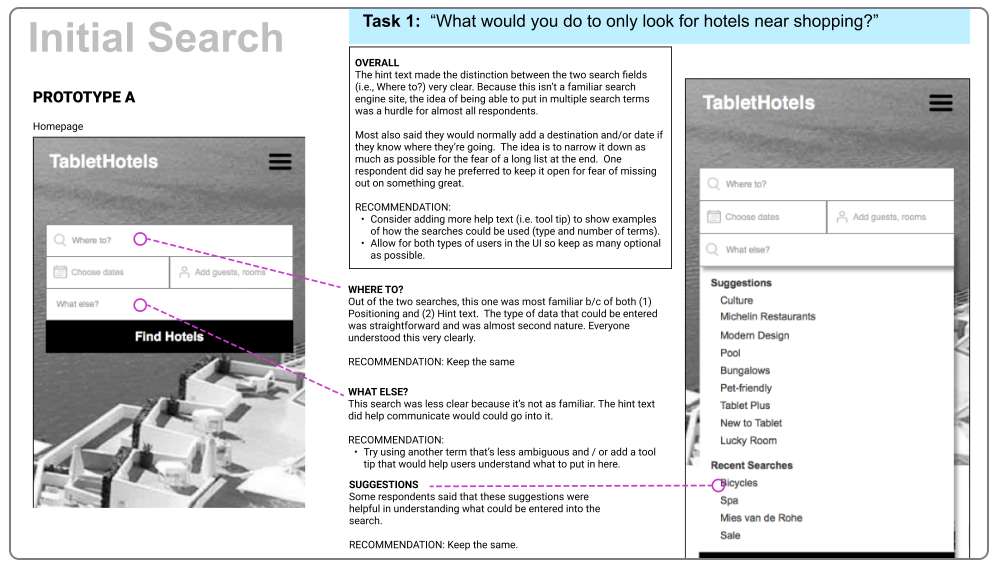
The platform required users to select between two conceptually different search paths before seeing any results. This forced premature decision-making at a high-intent moment, increasing confusion and abandonment—particularly for first-time and ad-driven users.
Why it mattered
The experience deviated from industry-standard search mental models.
Internal teams lacked clarity on which flow actually performed better.
Discovery
UX Audit
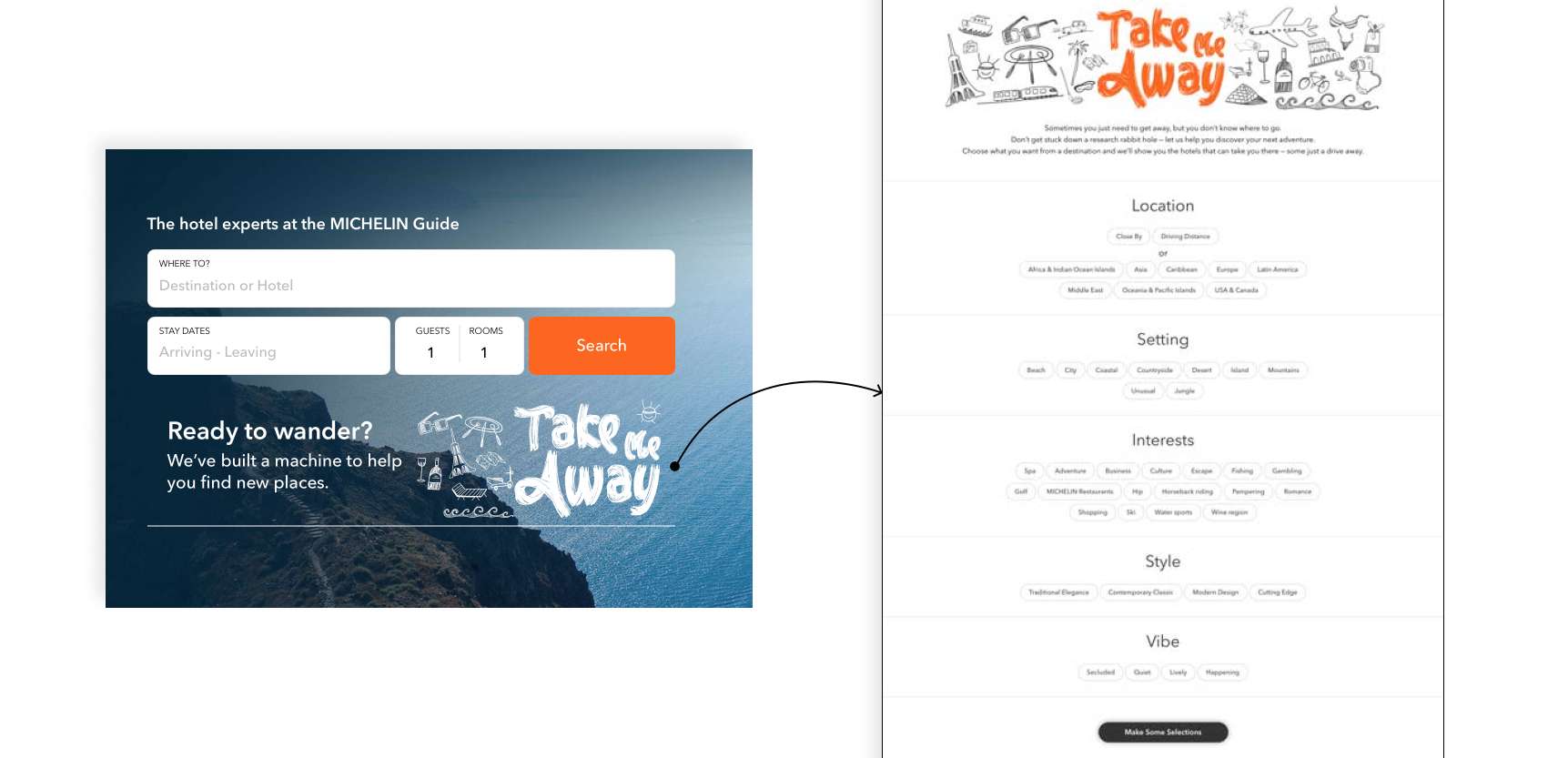
The UX audit revealed that the platform mainted two competing search systems with different logic, terminology, and navigation–creating unnecessary cognitive load and inconsistency.
Audit focus areas:
Key Conclusions
Maintaining parallel search paths increased mental effort without increasing perceived value. Consolidation presented the clearest opportunity to reduce friction while preserving the platform’s curated positioning.
See the final deck for competitive analysis, audit, & recommendations.
Solution
Consolidating competing decision systems
We replaced two parallel search journeys with a single, standardized search flow aligned with common industry mental models. Curation was preserved through filtering and results presentation rather than upfront path selection.
Design priorities:
Clear, comparable listings with transparent details.
A seamless transition from discovery to booking.
Validation
Usability Testing
We conducted moderated usability testing with 10 participants to evaluate:
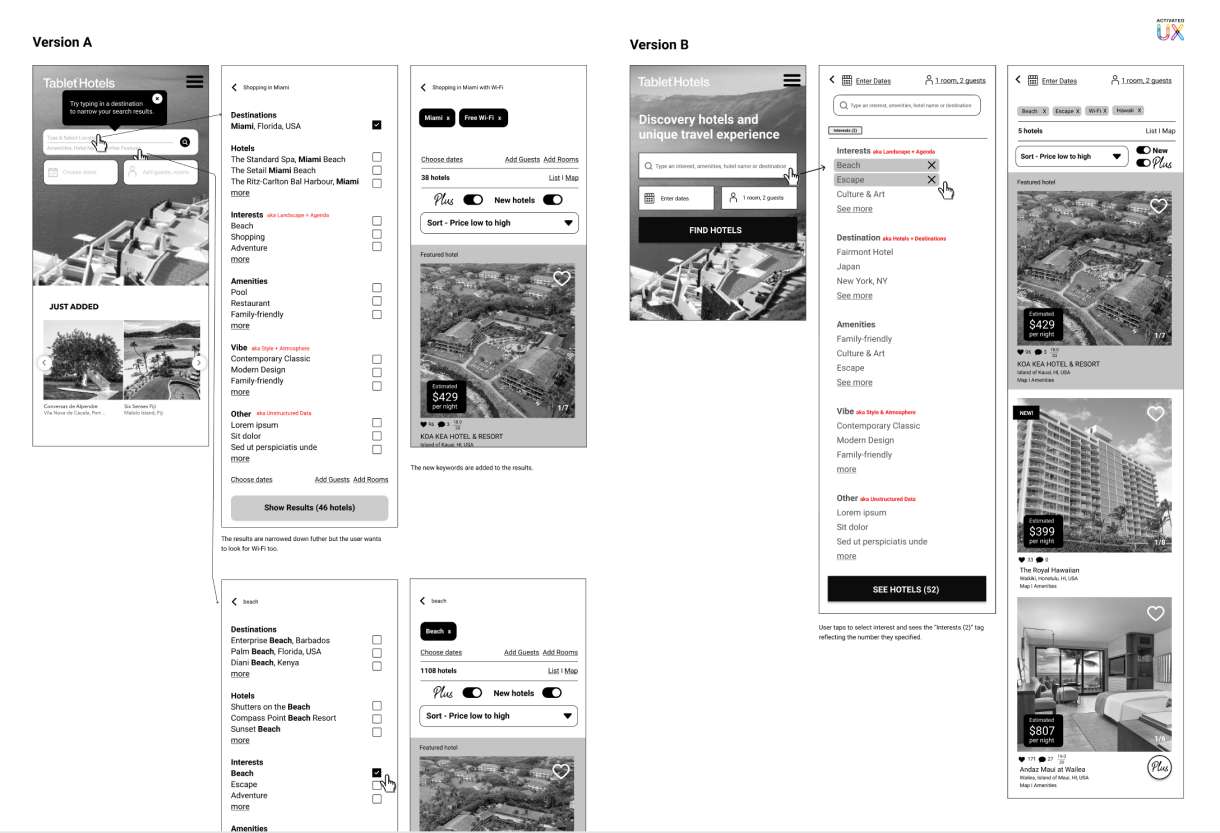
See the usability results deck for test results and analysis.
Key Insights
Brand vs. Behavior Misalignment
Testing revealed a gap between the client’s intended audience and actual power users. Many participants arrived via promotional channels and prioritized speed and clarity over the “curated discovery” narrative.
While the client chose not to pivot their broader strategy, this insight informed how the unified search could support both exploratory and transactional users without fragmening the system.
Reflection
Stakeholder Alignment Under Constraints
In future engagements, I would introduce earlier research readouts to align stakeholder on emerging signals before final recommendations. This would reduce late-stage resistance and allow business constraints to shape solutions sooner.
Even when recommendations weren’t fully adopted, grounding decisions in validated research ensured stakeholder to make informed, risk-aware choices.